

When you're comparing property management software, it really boils down to this: AppFolio and Buildium are built for growth-minded managers who need a powerful, all-in-one system. On the other hand, TenantCloud is a fantastic, budget-friendly starting point for landlords with just a handful of properties. The right tool for you depends entirely on where you are today and where you want to be tomorrow.
Finding Your Way in the Property Management Software Maze
Let's be honest, the days of juggling clunky spreadsheets are numbered. Modern landlords and property managers are moving to dedicated platforms for a reason. These aren't just fancy rent collection tools; they're the central nervous system for your entire operation, streamlining everything you do, cutting down on costly mistakes, and dramatically improving how you connect with tenants. But with so many options out there, picking the right one can feel like a huge task.
This guide is a practical, no-fluff comparison of three of the biggest names in the game: Buildium, AppFolio, and TenantCloud. We're going to break down their core features, pricing, and who they're really for, so you can make a decision you won't regret. It's the small differences that often have the biggest impact on your day-to-day work and, ultimately, your bottom line. As you weigh your options, you might find it helpful to look at a direct comparison of Showdigs against other leasing software to see how specialized tools fit into the bigger picture.
What Really Matters When You're Choosing?
Picking a software platform is a serious commitment, so it pays to get clear on your needs before you even start looking at demos. Here's what to focus on:
- Portfolio Size and Type: A system built for a 1,000+ unit apartment complex is overkill—both in features and price—for a landlord managing five single-family homes.
- Must-Have Features: What can't you live without? Is it sophisticated trust accounting, built-in tenant screening, or a top-notch owner portal? Make a list of your non-negotiables.
- Budget and Room to Grow: Look at the total cost, not just the monthly fee. Factor in onboarding costs and any per-unit charges, and make sure the platform can scale with you as your portfolio expands.
We’ll also touch on how "invisible tools" like Recurrr can fill in the gaps. Think of Recurrr as a little productivity hack that works alongside these big platforms, automating all the small, recurring tasks that eat up your day. By combining a core system with smart automations, you're not just managing properties—you're building a truly efficient operation and figuring out how to improve team efficiency.
The Bottom Line: The best software doesn't just fit your business today; it gives you a clear runway for growth. It should handle the routine stuff automatically, freeing you up to focus on what really matters—keeping tenants happy and growing your portfolio.
A quick side-by-side look at our three contenders shows just how different their target audiences are.
SoftwareBest ForKey DifferentiatorBuildiumGrowth-Oriented ManagersPowerful features with a user-friendly interface.AppFolioLarge-Scale OperatorsAll-in-one, premium platform with extensive tools.TenantCloudDIY LandlordsBudget-conscious with a free tier for small portfolios.Comparing Core Features for Daily Operations
When you're comparing property management software, the right choice really comes down to how well it handles your day-to-day grind. Your business runs on its core features—rent collection, maintenance management, and tenant screening. A small snag in any of these can blow up into a massive headache when you're managing multiple properties.
Let's dive into a head-to-head comparison of how Buildium, AppFolio, and TenantCloud tackle these mission-critical jobs. Each platform has its own philosophy, and figuring out those nuances is the key to finding the one that matches how you work.
The whole point of dedicated software is to get you out of spreadsheets and into a more organized, efficient system.
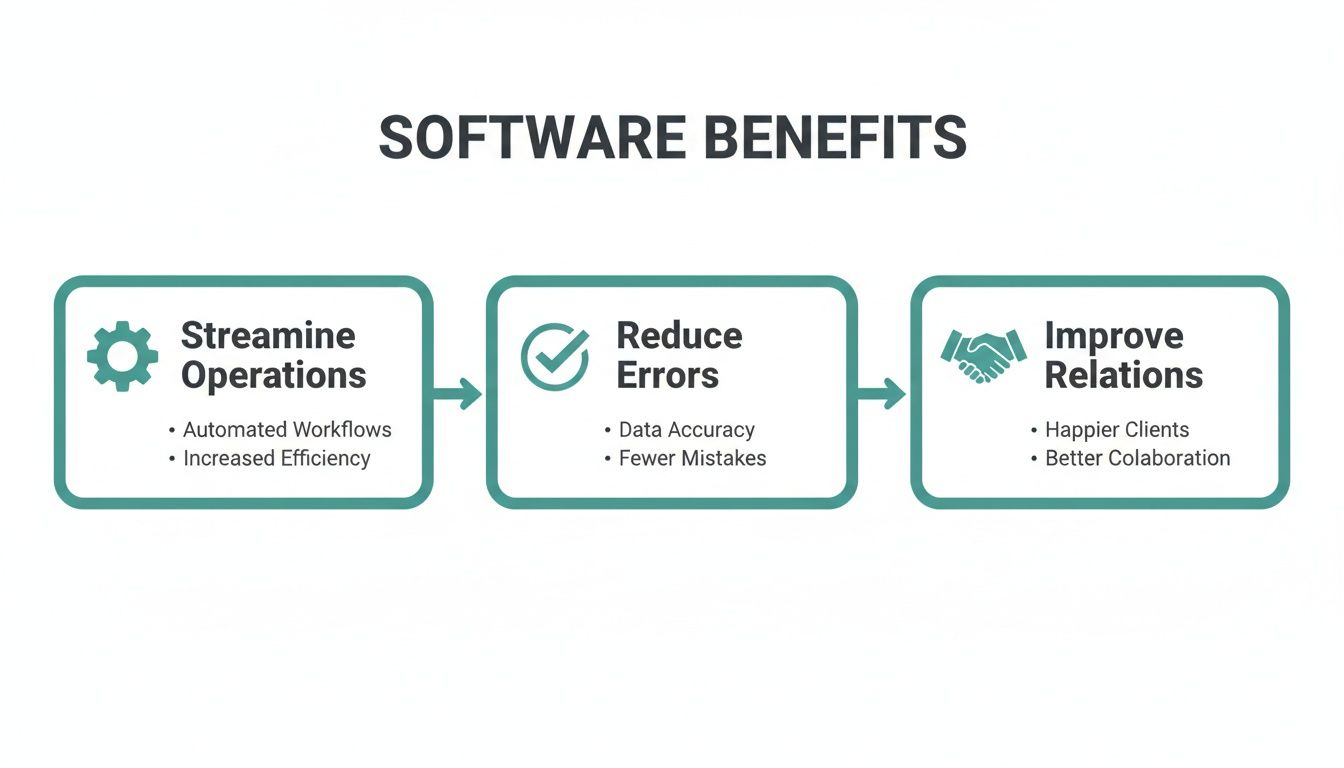 Ultimately, the right tool smooths out your workflows, cuts down on costly manual errors, and builds better relationships with tenants and owners through clear, transparent communication.
Showdown on Rent Collection
Getting rent in on time is the absolute lifeblood of any property management business. It's not just about getting paid; it’s about having a system that automates, tracks, and provides total financial clarity. The way each platform approaches this tells you a lot about who it's built for.
TenantCloud is all about simplicity and accessibility, making it a great starting point for new landlords. It covers the basics with online payment options like ACH and debit/credit cards, which is a huge leap from chasing down paper checks. While its late fee automation is there, it's not as slick as its competitors. It’s a solid entry point, but you might find yourself doing more manual work as your portfolio expands.
Buildium steps it up with a much more robust and automated system. It gives tenants more ways to pay—including ACH, credit card, and even retail cash payments—which is a big deal for accommodating everyone. But its real power is in the automated late fee calculations and notifications. You can customize them, set them, and forget them, which saves a ton of time and avoids those awkward conversations. For more strategies on this, check out our guide on how to collect rent from tenants.
AppFolio treats rent collection like an enterprise-level operation, complete with AI-powered tools. It goes beyond the standard online payments with a system built for massive efficiency. Think automated payment reminders, seamless late fee processing, and deep-dive reporting that uncovers payment trends and delinquencies. For large-scale operators juggling complex financials, that level of insight is priceless.
Key Takeaway: TenantCloud is your go-to for simple, low-cost online payments. Buildium offers serious automation for managers who are scaling up, while AppFolio provides an institutional-grade system for large portfolios that demand advanced reporting and AI-driven efficiency.
Unpacking Maintenance Management
Nothing tanks a tenant relationship faster than a maintenance request gone wrong. Being able to efficiently track a work order from the initial call to the final sign-off is what separates the pros from the amateurs.
- TenantCloud’s Approach: The system here is straightforward. Tenants can submit requests with photos, and landlords can track them. You can assign vendors, but the in-app communication tools are pretty basic. It gets the job done if you have a handful of units and you’re personally involved in every single repair.
- Buildium’s Workflow: Buildium offers a much more structured workflow. When a work order comes in through the tenant portal, managers can turn it into a task, assign it to staff or outside vendors, and track every step with detailed communication logs. This central hub keeps everyone in the loop and prevents things from slipping through the cracks.
- AppFolio’s Integrated Solution: AppFolio delivers a fully integrated, mobile-first maintenance system. It uses smart routing to automatically triage and assign work orders based on rules you set. Vendors get assignments, submit invoices, and communicate right from a dedicated mobile app. This creates a closed-loop system that dramatically cuts down on administrative busywork for managers handling a high volume of requests.
Evaluating Tenant Screening Capabilities
Placing the right tenant is the #1 way to prevent problems down the road. A rock-solid screening process is non-negotiable, and each software offers a different level of depth and convenience.
TenantCloud partners with TransUnion for basic screening packages that cover credit, criminal, and eviction histories. It’s a pay-per-use model, which is perfect for landlords who only screen a few people a year. The reports are solid, but the process feels a bit disconnected compared to the others.
Buildium brings screening right into the platform. Managers can define their minimum criteria, and the system handles the rest, running comprehensive background, credit, and eviction checks automatically. The results pop up directly in the applicant's profile, making the decision process a whole lot smoother.
AppFolio has the most advanced screening tools, even using AI to analyze applicant data and offer a recommendation. The reports are incredibly detailed but easy to read, and the whole journey—from application to screening to e-signing the lease—happens inside one unified system. This kind of integration is built to speed up leasing cycles for large-scale operations.
Core Feature Comparison Matrix
To give you a quick, at-a-glance view, here’s how the core features stack up side-by-side. This isn't just about checkboxes; it’s about how these features feel and function in the real world.
Feature CategoryBuildiumAppFolioTenantCloudRent CollectionRobust automation, multiple payment types (including cash), customizable late fees.AI-powered, advanced reporting, automated reminders, built for large-scale efficiency.Basic online payments (ACH/card), simple late fee functionality, ideal for beginners.MaintenanceStructured workflow, vendor and staff assignment, centralized communication logs.Mobile-first, smart routing for auto-assignment, fully integrated vendor portal.Simple request submission with photos, basic tracking, best for hands-on landlords.Tenant ScreeningFully integrated, customizable criteria, reports embedded in applicant profiles.AI-assisted recommendations, comprehensive reports, seamless workflow from app to lease.Pay-per-use via TransUnion, covers the basics (credit, criminal, eviction), less integrated.Each platform clearly targets a different type of user. TenantCloud is the accessible entry point, Buildium is the powerful all-rounder for growth, and AppFolio is the enterprise-grade machine for large portfolios.
Looking Past the Basics: Advanced Features and Integrations
Once you get past the daily grind of collecting rent and logging maintenance tickets, the real differences between property management platforms start to show up. This is where we look at the advanced stuff—the features and integrations that turn a simple tool into the true command center for your business, especially when you start to grow.
How well does the software handle tricky financials? Can it communicate with hundreds of tenants at once? Does it play nice with the other apps you use? These are the questions that separate the good from the great. After all, modern property management isn't just about checking boxes; it's about building a tech ecosystem that actually works for you.
 ### Financial and Accounting Depth
If you're managing properties for other people, rock-solid accounting is non-negotiable. And I'm not just talking about tracking who paid rent. This is about trust, compliance, and keeping owners happy.
TenantCloud has accounting tools that are perfectly fine for a DIY landlord managing their own units. It can generate basic reports, but you won't find sophisticated trust accounting or the kind of detailed owner statements that third-party managers need. It’s a great place to start, but you’ll likely outgrow it.
Buildium steps things up significantly. Its financial toolkit is much deeper, excelling at creating professional owner statements, managing budgets, and simplifying bank reconciliations. The trust accounting features are a standout, making it a reliable choice for managers juggling funds for multiple clients.
AppFolio brings an enterprise-level accounting suite to the table. This thing is built for complex portfolios, handling stuff like automated CAM reconciliations for commercial properties and offering advanced forecasting tools. For large operators, the ability to get real-time, drill-down financial data is a game-changer.
The depth of a platform's accounting tools tells you exactly who it was built for. A simple ledger is fine for a duplex, but as you scale, you need dedicated trust accounting, automated owner payouts, and killer reporting to stay compliant and maintain trust.
Communication Suites and Tenant Portals
Today's tenants live on their phones and expect instant, digital communication. A clunky tenant portal or a lack of automated messaging creates a mountain of administrative work and leads to frustrated residents.
- TenantCloud: Gives you a basic tenant portal for payments and maintenance requests. Its ability to send mass messages is pretty limited, so it’s best for landlords who are mostly communicating with tenants one-on-one.
- Buildium: Offers a much more complete tenant portal and stronger communication tools, including templates for emails and text messages. Sending out a building-wide announcement or a targeted reminder is a breeze.
- AppFolio: Delivers a top-tier, mobile-first communication hub. The tenant portal is incredibly intuitive, and the system even uses AI to help field leasing questions and routine messages. This frees up your team to focus on things that actually require a human touch.
The All-Important Role of Integrations
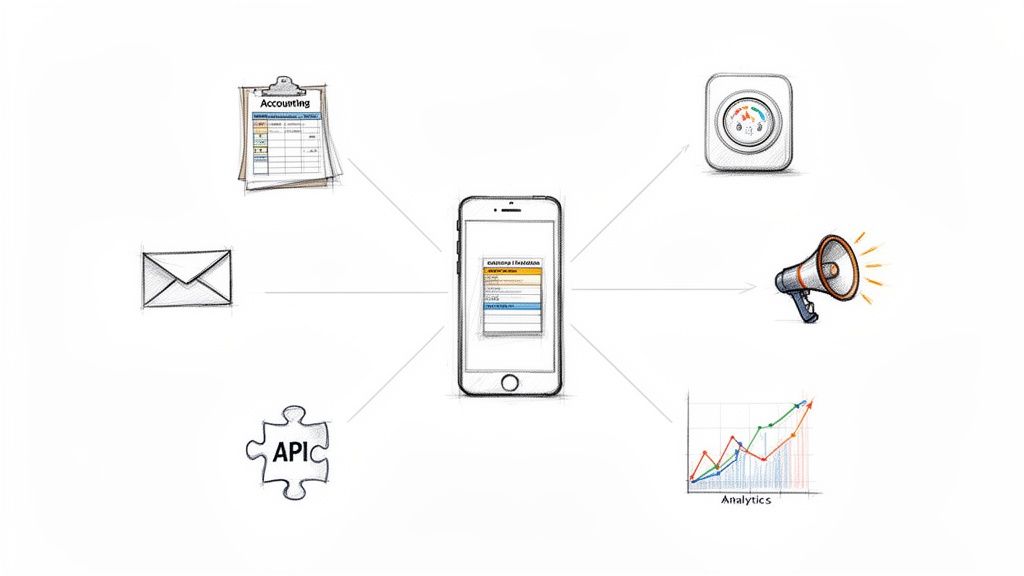
Let's be real: no single piece of software can do everything perfectly. A platform's real power often lies in its ability to connect with other specialized apps—from smart locks and utility billing services to advanced marketing platforms.
TenantCloud keeps its integration ecosystem small, focusing on essentials like QuickBooks and TransUnion for tenant screening. This makes sense for its target audience of smaller landlords who don't need a sprawling tech stack.
Buildium opens things up with an API (on its higher-priced plans) and a growing marketplace of integrations. This gives more tech-savvy managers the freedom to connect various third-party tools, offering a nice bit of flexibility.
AppFolio goes all-in with its AppFolio Stack™ Marketplace, a curated list of vetted partners. This approach ensures that any integration you use—whether for smart home automation or renters insurance—works seamlessly. For operators wanting to build a powerful, interconnected system without the guesswork, this is the gold standard.
While these big platforms handle the core property tasks, it's the small, repetitive jobs that often slip through the cracks. This is where a small productivity hack like Recurrr can make a surprising difference. Think of it as a hidden gem for automating those recurring reminders your main software overlooks, like scheduling quarterly gutter cleanings or sending annual insurance verification follow-ups. Understanding the power of recurring task management can show you how these complementary apps help create a truly complete system.
What's This Really Going to Cost Me?
A software's price tag rarely tells the whole story. When you're looking at property management software, that monthly fee you see advertised is just the tip of the iceberg. To get the real picture, you have to dig into the total cost of ownership—that means everything from mandatory setup fees to extra charges for "premium" features and support.
Let’s pull apart the pricing for Buildium, AppFolio, and TenantCloud to see what your investment actually looks like in the long run. We'll break it down by portfolio size so you can see exactly where you fit in.
Breaking Down the Pricing Models
Each of these platforms is built for a different kind of landlord or property manager, and that's reflected in how they charge. The "best value" is completely situational. Hidden fees and features locked behind higher tiers can turn a cheap solution into an expensive headache if you're not paying attention.
TenantCloud is all about the budget-conscious landlord. It's famous for its free plan that covers up to 75 units for basic stuff like rent collection and maintenance tickets. But if you need essentials like e-signatures or QuickBooks integration, you’ll have to jump to a paid plan, which starts around $12 per month. This a la carte style keeps your entry cost super low, but the little things can add up as your needs grow.
Buildium goes after managers who are in growth mode. Its pricing is more inclusive, bundling more features into its "Growth" and "Premium" tiers as the price goes up. The cost-per-unit drops as you add more properties, which feels great when you're scaling. Just keep an eye out for the mandatory onboarding fee—it can be a pretty significant upfront hit.
AppFolio plays in the premium, all-in-one space. It charges a per-unit fee with a monthly minimum, a model built for larger, professional outfits that need every bell and whistle from day one. While the sticker price is higher, you get fewer surprise "add-on" costs for core features. This makes your monthly expenses much more predictable, which is a huge plus for established firms.
The biggest mistake you can make is picking a platform based on its cheapest plan. Think about the features you’ll need a year from now, not just today. That’s how you’ll find the pricing model with the best long-term value.
Cost Scenarios by Portfolio Size
To make this less abstract, let's see how this plays out for different property managers.
- The Solo Landlord (1-10 Units): For someone managing just a handful of properties, TenantCloud is the hands-down winner on cost. The free or cheap plans give you the digital tools you need without a big financial leap. At this scale, the pay-per-use screening and basic features are more than enough to get the job done.
- The Growing Manager (25-150 Units): This is Buildium's sweet spot. Its per-unit pricing starts to make a lot of sense, and the bundled features—like stronger accounting and communication tools—are well worth the investment. That onboarding fee is still a factor, but it pays off by giving you a platform you can grow with instead of outgrow.
- The Large-Scale Firm (200+ Units): For big portfolios, AppFolio often becomes the most logical choice. Yes, the per-unit cost looks steep, but its powerful automation, AI tools, and all-inclusive feature set can drive huge operational savings. At this size, the time you save on leasing and maintenance usually outweighs the higher subscription cost, delivering a solid return.
Finding the Best Software for Your Portfolio
Picking the right property management software isn't about finding a single "best" tool. It’s about finding the one that fits your portfolio—its size, its complexity, and where you want to take it. A platform built for a national real estate firm is just going to be an expensive headache for a landlord with two units. The real trick is matching the software’s DNA to your day-to-day reality.
And it's a space that's growing like crazy. The global market for this software was valued at USD 24.18 billion and is expected to more than double to USD 52.21 billion by 2032. That explosion is all about landlords and managers needing better tools to handle modern real estate, especially in North America. You can dig into the market trends data to see exactly what's fueling this shift.
To cut through the noise, we’ve broken down our top picks for three very different types of users.
For the Budget-Conscious Landlord: TenantCloud
If you’re just getting started or managing a small portfolio you own yourself, TenantCloud is a no-brainer. Its biggest draw is the free plan. It gives you the core digital tools you need—like online rent collection and basic maintenance tracking—without costing you a dime.
This lets you look and act professional right from the start, getting you away from clunky spreadsheets and chasing down paper checks. While it doesn't have the deep accounting or fancy automation of the bigger players, TenantCloud solves the immediate problems every new landlord faces. It’s the perfect on-ramp to managing properties with proper tech.
For the Growth-Oriented Manager: Buildium
Once you start managing more than a handful of units, and especially when you start managing properties for other people, Buildium is the logical next move. It hits that perfect middle ground, offering powerful features without being overly complicated, which is exactly what you need when you're focused on scaling up.
Buildium's real strengths are its solid accounting (including trust accounting for client funds) and its all-in-one communication tools. These are mission-critical for keeping owners happy and tenants in the loop when you have a lot more going on. It provides a stable, scalable base to grow your business on, without jumping into the deep end with enterprise-level software.
The jump from managing your own properties to managing for others is the single biggest turning point. That’s when tools for owner statements, trust accounting, and centralized communication go from "nice-to-have" to "can't-live-without." Buildium was made for this exact transition.
For the Large-Scale Operator: AppFolio
For the established property management companies running large, diverse, or mixed-use portfolios, AppFolio is the top-tier, do-it-all platform. Yes, it has a premium price tag, but you get what you pay for: a massive feature set with AI-powered tools, sophisticated financial reporting, and a tightly integrated system.
AppFolio is engineered for one thing: extreme operational efficiency at scale. Things like AI leasing assistants and automated work order assignments are designed to claw back huge amounts of staff time. This allows big teams to manage more doors per person, turning the software into an investment that pays for itself. It’s built to handle institutional-grade demands and gives you the data you need to fine-tune performance across a huge portfolio.
The Hidden Gem for Filling the Gaps
Here's the thing: even the most expensive all-in-one platform can’t automate every little thing. You'll always have those quirky, specific tasks that fall through the cracks. This is where a simple productivity tool like Recurrr becomes your secret weapon.
Think of it as a silent partner that handles all the repeating reminders your main software doesn't cover. It’s not a property management platform, but it’s a small productivity hack that's perfect for plugging the gaps.
For instance, you could use Recurrr to automatically send:
- Quarterly reminders to all tenants to test their smoke detectors.
- Annual pings to your team to collect updated renter's insurance policies.
- Bi-annual alerts to schedule preventative HVAC service across all your properties.
Recurrr’s focused job is to make sure those small but crucial tasks never, ever get forgotten. It’s the perfect complement to the bigger systems, ensuring your operation runs without a hitch.
Filling the Gaps with the Right Tools
Even the best all-in-one property management software can't do everything. You'll find that while these platforms are amazing at handling the big stuff, there are always little, unique, recurring tasks that slip through the cracks. It's in these gaps where a simple, focused tool can make a world of difference.
This is exactly where an invisible tool like Recurrr shines. It isn't trying to replace your core property management system. Instead, it's designed to be a perfect sidekick, handling all those nagging, repeatable automations that the bigger platforms just weren't built for. Its power is in its simplicity—letting you nail down critical small tasks without bloating your main workflow.
 ### What This Looks Like in the Real World
Think about setting up simple, automated reminders that just run on their own, making sure nothing gets missed. With a smart complementary tool, you can put those specific, repeatable jobs on autopilot.
Here are a few ideas:
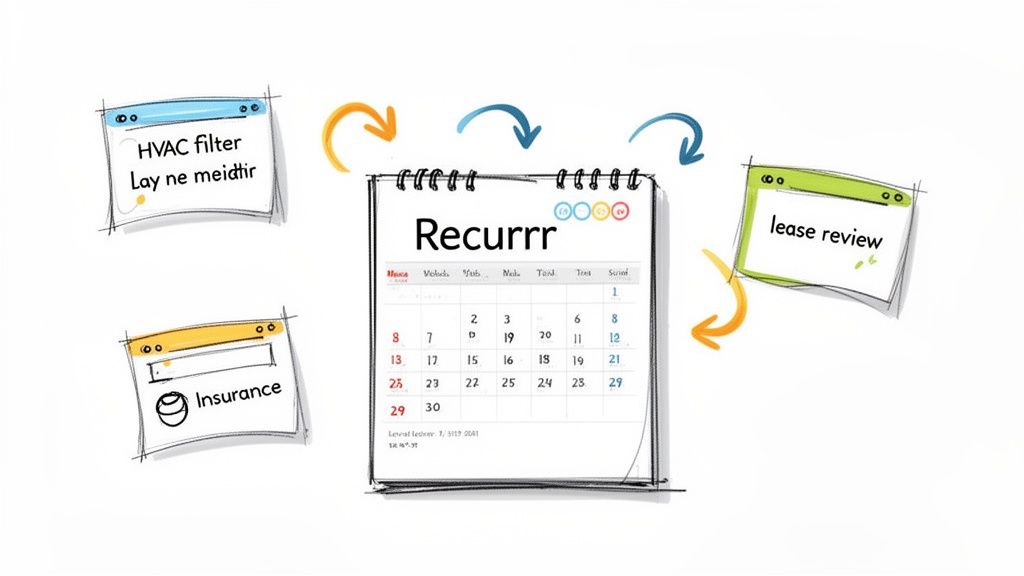
- Quarterly Tenant Nudges: Automatically email tenants a reminder to swap out their HVAC filters or check their smoke detectors. No more manual follow-ups.
- Lease Renewal Alerts: Get an internal notification pinged to your team 90 days before any lease is set to expire. This gives you plenty of runway to start the renewal conversation.
- Compliance Follow-ups: Set up an automated email sequence to chase down missing compliance docs or updated insurance certificates.
This kind of focused automation is a huge part of a wider industry trend. Residential property management software is exploding in popularity precisely because it can slash administrative work by a massive 45%. And a huge piece of that puzzle is communication—with 60% of portfolios using software to talk to tenants more effectively. Smart reminders are key.
Recurrr’s focus on automation lifts the mental burden of tracking dozens of small but crucial tasks. It frees you and your team to spend time on what really moves the needle: building tenant relationships and growing the portfolio.
When you automate these niche tasks, you build a much more solid, reliable workflow. We've written a whole guide on the power of recurring task management if you want to dive deeper. And while you're thinking about your software stack, it's smart to look at how other technologies can fit in. Check out these cutting-edge AI tools for real estate agents to see what else is out there.
Got Questions? We've Got Answers
Diving into property management software can feel overwhelming. Let's tackle some of the most common questions that pop up when you're trying to find the right fit.
What Features Actually Matter the Most?
Every landlord's needs are a bit different, but if you strip it all down, two features are absolutely non-negotiable: automated online rent collection and a centralized maintenance tracking system. These two directly solve the biggest headaches in the business—getting paid on time and handling repairs without losing your mind.
Right behind those is a solid accounting and reporting suite. You need that financial clarity to see if you're actually profitable, keep your owners happy, and make smart decisions. Without those three pillars, any software is really just a glorified digital filing cabinet.
How Painful Is It to Switch to a New System?
I won't sugarcoat it: switching platforms is a real project, but it's completely doable if you plan ahead. The biggest hurdle is always data migration—moving all your tenant histories, financial records, and lease documents over. It demands a ton of organization to make sure nothing gets lost in the shuffle.
Most software companies will help you with data imports, but you absolutely have to ask about the costs and any potential compatibility nightmares beforehand. Honestly, the best way to avoid this pain is to pick a scalable solution from day one that can grow with you.
The headache of a software migration is temporary. The frustration of being stuck with the wrong system is a daily grind. Choose a platform that fits where you want to be in five years, not just where you are today.
How Does a Tool Like Recurrr Fit In with My Main Software?
Think of a tool like Recurrr as a nimble, "invisible" assistant that picks up the slack where your main platform leaves off. It’s a lightweight productivity hack that just works quietly in the background, handling all the small, repeatable tasks your primary software wasn't built for.
For instance, you could set up Recurrr to automatically send a warm "Welcome to the Community" email a week after a new tenant moves in. Or you could schedule automated reminders for your team to handle seasonal landscaping. It’s perfect for filling in the cracks, managing those recurring communications with a simple "set it and forget it" approach so the little things never fall through the cracks.
Ready to stop wasting time on the small stuff? See how Recurrr can become your invisible productivity partner and free you up to actually grow your portfolio. Learn more about Recurrr today.